
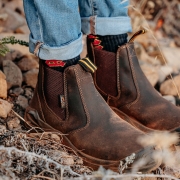
ProFit Is South Africa’s Perfect Fit Safety-Footwear Supplier
Why ProFit Safety Footwear Is South Africa’s “Perfect Fit” Safety-Footwear Supplier (And Why That Matters)
In South Africa, safety footwear is one of those “quiet” procurement decisions that only becomes loud when it goes wrong.
When the wrong boot is chosen, you don’t just get a few grumbles in the canteen. You get blisters, fatigue, slips, premature failure, safety incidents, replacement cycles that chew budgets, and worst case-non-compliance risk if the paperwork behind the product doesn’t stand up to scrutiny.
So what does the perfect safety-footwear supplier actually look like in the real world?
It’s not just a catalogue of boots. It’s a supplier who can prove compliance, deliver consistently, support you after the sale, and offer genuine tier-for-tier value – without forcing you to compromise on materials, build quality, or lead times.
That’s the lens through which ProFit Safety Footwear stands out in the South African market.
Below is a practical, compliance-first, operations-friendly breakdown of why ProFit can credibly claim to be the “perfect” safety footwear supplier – especially when you judge them on the big five that matter to safety officers, procurement teams, and business owners:
- ISO and NRCS compliance you can verify
- Exceptional build quality and premium components
- Competitive pricing (tier-for-tier, not apples-to-oranges)
- Aftersales service and warranty support that’s actually defined
- Stock depth + distribution that enables 36-48 hour delivery at scale
1) Compliance First: ISO Standards Are Non-Negotiable – NRCS Approval Makes It Real
Let’s start with the hard truth: in South Africa, safety footwear isn’t a “nice to have.” If it’s toe-protected PPE footwear, it must comply with the relevant SANS/ISO requirements and must be approved by the NRCS (National Regulator for Compulsory Specifications). ProFit’s own guidance is blunt about this: SANS has adopted the ISO marking, and safety footwear sold locally must have certificates checked and approved by the NRCS, which issues a LOA (Letter of Authority).
ProFit repeats the same compliance reality in their FAQ: all toe-protected safety footwear sold in South Africa must comply with SANS/ISO 20345 standards and be approved by the NRCS in Pretoria.
That’s the baseline. Where ProFit becomes compelling is what happens next:
LOA numbers are shown at product level (not hidden in a filing cabinet)
If you’ve ever had to chase paperwork across three departments, you’ll appreciate this. ProFit product pages commonly display the NRCS LOA number and the ISO specification right on the item.
Examples:
- SAMSON (rubber/PU heavy duty): LOA NRCS/9002/288043/0730, spec ISO 20345:2023
- Econo Chelsea Boot Black (entry-level, cost-effective): LOA NRCS/9002/288043/0606, spec ISO 20345:2023
- Parson S1 Boot (lightweight, wide fitting): LOA NRCS/9002/288043/0600, spec ISO 20345:2023
So instead of “Trust us, it’s compliant,” the site encourages a far more professional standard: verify the LOA and the standard per style.
ISO 20345:2023 isn’t treated like a buzzword – it’s explained
ProFit also publishes educational material on ISO 20345:2023 and what changed from earlier versions, including the shift in slip resistance labeling (e.g., SRC removed, SR used under the 2023 revision) and updated puncture-resistance labeling (PL/PS).
That matters because the most reliable suppliers don’t just sell – you get the thinking behind the specification so your site risk assessment, PPE policy, and purchasing decisions actually align.
Bonus: they explicitly reference the NRCS’s role (DTIC entity) and fair trade intent
On their NRCS compliance page, ProFit describes the NRCS as an entity of the Department of Trade, Industry and Competition (DTIC), established to provide compulsory specifications/technical regulations with aims including protecting human health and safety and ensuring fair trade.
That’s exactly the kind of compliance framing you want from a serious supplier: safety compliance isn’t marketing – it’s governance.
2) Premium Materials and Components: The “Comfort + Durability + Protection” Triangle
“Premium” is a word that gets thrown around a lot. The difference is whether the product data backs it up – materials, sole compounds, toe protection, midsole protection, lining/footbed decisions, and the small details that determine longevity.
On ProFit’s product pages and educational posts, you can see a consistent design philosophy:
Leather uppers that are clearly specified (not vague)

Raw Leather
For instance:
- Parson S1 Boot lists Full Grain Leather upper material.
- Diablo (Shoe) lists full grain leather upper (and padded leather tongue/collar).
- Econo Chelsea Boot Black lists Premium Haircell Genuine Leather.
- SAMSON highlights an “oily waxy” water-repellent leather spec with padded leather collar/tongue.
This matters because “leather” is not one thing. Footwear that holds shape, stays breathable, resists tearing, and survives abrasive work conditions starts with good hides and correct finishing.
Sole compounds engineered for the job (PU & Rubber – used appropriately)
ProFit’s own sole-compound breakdown is refreshingly straightforward:
- Polyurethane soles are described as flexible, lightweight, antistatic, resistant to oil/acid/petrol/diesel, slip resistant, and typically the most cost-effective compound due to volume.
- Rubber soles are positioned as heavier and more expensive, but designed for harsh environments, offering superior cut/puncture resistance and up to 300°C heat resistance, and being non-conductive.
- ProFit states they use multiple dual-density PU soles and multiple heat-resistant/non-conductive rubber soles across the range.
And you can see those choices reflected in actual products:
- Parson S1 Boot uses dual density PU and calls out a heat resistant outsole (110°C).
- Econo Chelsea Boot Black uses dual density PU and calls out 90°C heat resistance.
- SAMSON uses a dual density rubber/PU combination and calls out 300°C heat resistance plus chemical/fuel resistance.
ProFit also gives a practical, heavy-duty explanation of why rubber matters in harsh environments (scaffolding, abrasive metal surfaces, concrete, stones) and ties it to boot selection and longevity.
Footbeds and comfort systems are treated as core PPE, not an afterthought

A lot of brands obsess over toe caps and forget that discomfort drives non-compliance (people stop wearing the boot correctly, or switch to the wrong shoe “because it’s comfy”).
ProFit highlights comfort components at product level. For example, the SAMSON includes a ProFit ComFit PU Gel Foam Footbed and penetration resistance via a Kevlar midsole.
Even the FAQ leans into the idea that boots should match foot anatomy, and that they carry multiple toe-cap shapes to cater for different foot shapes.
That’s the comfort-to-compliance link: when a supplier takes fit seriously, safety adoption improves.
PU hydrolysis is openly addressed (storage realities = real-world durability)
ProFit also discusses polyurethane injected soles and hydrolysis – why storage conditions matter and how hydrolysis can occur when soles are stored unventilated for long periods.
This is the kind of “grown-up” detail that indicates product understanding beyond sales copy: durability isn’t only manufacturing – it’s also logistics, storage, and distribution discipline.
3) Competitive Pricing Tier-for-Tier: Value That Survives Real Comparisons
“Competitive pricing” is only meaningful if you compare equivalent products:
- Similar compliance level (ISO spec)
- Similar materials (upper, sole compound, toe cap)
- Similar application (general purpose vs heavy duty)
- Similar distribution/lead time
- Similar warranty and aftersales terms
ProFit’s site gives a decent basis for tiering because it publishes indicative pricing and positions certain styles as entry-level vs heavy duty.
For example:
- Econo Chelsea Boot Black is explicitly described as “entry level” and “cost-effective” at R 515.00 excl. VAT, while still listing ISO 20345:2023 and a specific LOA.
- Parson S1 Boot sits in a practical “everyday” workhorse tier at R 552.00 excl. VAT, also under ISO 20345:2023 with LOA shown.
- Heavy-duty options move into higher tiers (for example, SAMSON relates to oil & gas/mining/high-slip-risk environments and is built around rubber/PU, Kevlar penetration resistance, etc.).
Even ProFit’s homepage testimonials specifically call out the mix of quality/comfort and pricing value – one reviewer describes it as “very well priced for the quality,” and another calls out “Brilliant product, brilliant prices.”
And from a procurement standpoint, ProFit’s FAQ notes that Certified Partners can offer “highly competitive pricing” due to monthly quantity orders kept in stock.
Put simply: ProFit isn’t asking the market to believe a vague claim. They show enough to make tier-for-tier comparison possible.
4) Aftersales Service: Defined Warranty + Real Follow-Through
Aftersales isn’t “being friendly.” It’s what happens when something goes wrong, and how quickly it gets fixed without chaos.
A clear 12-month warranty, with coverage and exclusions spelled out
ProFit states warranty coverage on the entire safety footwear range is 12 months from date of purchase.
They also outline what’s covered (manufacturing defects, material failures like delaminating soles, split stitching not caused by misuse, hardware defects, defects in leather uppers under normal working conditions) and emphasize proper care guidelines.
That’s important because the best suppliers don’t do “hand-wavy guarantees.” They do structured support that procurement can rely on.
Aftersales follow-up is explicitly referenced in the ProFit network context
On a ProFit page describing their Zambia partner channel, it specifically mentions that staff “further after sales confirmation with our clients,” with a focus on ensuring satisfaction after purchase.
Even though that’s written in the context of a partner market, it reinforces the operational ethos: ProFit’s distribution model values aftersales engagement, not just the invoice.
5) Stock Holding and Delivery Speed: The 36-48 Hour Promise Is Built Into Their Model
South Africa is not kind to supply chains. If your supplier needs long lead times, your business ends up holding emergency stock “just in case,” which is basically money sleeping on shelves.
ProFit’s model is built around availability.
Delivery timeframes are clearly stated
ProFit’s FAQ states that online orders are shipped via The Courier Guy and “delivery is normally within 24-48 hours to most destinations,” with outlying areas up to 72 hours from dispatch.
So if your internal promise is “36-48 hours from receipt of order,” that sits comfortably inside the supplier’s stated norm for most locations.
Sizes are held ex-stock, with “no lead times”
In the same FAQ, ProFit states their men’s/unisex range is offered from UK size 2 to UK size 15 ex stock, and their ladies’ range from UK size 2 to UK size 9 ex stock, with “no lead times for any sizes.”
That’s not a small claim. It’s a big operational advantage-especially for:
- sites with mixed workforce sizing realities
- contractors who need fast replenishment
- emergency replacements
- rollouts where “one missing size” delays the entire issue cycle
A distribution network designed to avoid stock-outs, not cause them
ProFit also explains why their Certified Partner network is intentionally selective: they built a distribution network over years and aim to keep the balance of demand and supply “near perfect,” explicitly warning that unnecessary expansion can cause pipeline delays and stock-outs.
This is the kind of thinking that matters if you’ve ever experienced the classic problem: “Great product… when it’s available.”
Why ProFit Becomes the “Perfect Supplier” When You Judge the Whole System
Most suppliers try to win on one headline:
- “We’re the cheapest.”
- “We’re the toughest.”
- “We’re the most premium.”
- “We’ve got lots of styles.”
But safety footwear is never one-dimensional. The best supplier is the one that performs across the whole system:
Compliance system
- ISO alignment is explained, not just claimed
- NRCS LOA is treated as mandatory and product-level verifiable
Quality system
- Materials and sole compounds are fit-for-purpose, with clear reasoning
Value system
- Pricing is visible across tiers, and customers explicitly call out the quality-to-price ratio
- Partners can offer competitive pricing due to stock-based volume ordering
Service system
- Warranty is defined, structured, and practical
- Aftersales follow-through is part of the channel culture
Availability system
- 24–48 hour delivery norm is explicitly stated
- Ex-stock size depth reduces operational friction
- Distribution design aims to prevent stock-outs, not create them
A Simple Procurement Checklist (If You Want to Prove “Perfect Supplier” Internally)
If you’re planning on writing this up for your management or procurement team, here’s an easy framework you can lift into your internal memo:
- Compliance proof per style: Does the supplier provide ISO spec + NRCS LOA per product?
- Fit-for-purpose build: Are upper materials and sole compounds clearly specified and appropriate to the work environment?
- Tiered value: Are there credible entry, mid, and heavy-duty tiers with transparent pricing?
- Warranty clarity: Is there a written warranty with coverage, exclusions, and process?
- Speed and stock: Are sizes held ex stock and are delivery timelines consistently achievable?
On the evidence published across ProFit’s own site, ProFit scores strongly on every one of these.
Safety Footwear Isn’t a Product-It’s a Promise
When a worker laces up, they’re trusting the boot not just to pass a lab test, but to survive real work: diesel, dust, wet floors, scaffolding, concrete, long shifts, and the daily grind where comfort becomes safety.
And when a business chooses a supplier, it’s trusting them to deliver compliance, quality, value, and speed without excuses.
That’s why ProFit’s “perfect supplier” case is so persuasive: it isn’t built on one boast. It’s built on an entire operating model—compliance transparency, material clarity, tiered value, defined warranty support, and fast, stock-backed distribution
