Anti-Slip (Slip Resistant) versus Non-Slip

The terms anti-slip and non-slip are often used interchangeably in marketing, but from a technical, engineering, and standards perspective—especially in safety footwear—they are not identical. The key difference lies in measured friction performance, certification, and engineering intent, not just wording.

Below is a clear technical breakdown, which is especially relevant given your deep involvement in ISO-compliant safety footwear.

Core Technical Principle: Friction Coefficient

Slip resistance is governed by the coefficient of friction (COF) between the sole and the walking surface.

  • Higher COF = more grip
  • Lower COF = higher slip risk

There are two types:

  • Static COF – resistance before movement begins
  • Dynamic COF – resistance while sliding

Safety standards measure both under controlled conditions.

Anti-Slip: A Measured, Engineered Property

Technical definition:

Anti-slip refers to a product designed and tested to reduce slipping through specific materials, tread geometry, and certified friction performance.

It is an active engineering characteristic.

Key technical characteristics:

  • Tested against recognised standards (ISO, ASTM, EN)
  • Uses engineered sole compounds (PU, rubber, TPU blends)
  • Designed tread patterns to channel liquids away
  • Achieves defined minimum friction thresholds

ISO 20345:2023 classification

Modern safety footwear uses the SR marking (Slip Resistance):

Test surfaces include:

  • Ceramic tile with detergent
  • Steel surface with glycerol

A boot marked SR has passed measured slip-resistance tests.

Non-Slip: A Marketing or General Descriptor

Technical definition:

Non-slip is a non-standardised, non-quantified term that implies slip resistance but does not guarantee certified performance.

It is a descriptive term, not an engineering certification.

It does NOT automatically mean:

  • Tested to ISO 20345
  • Meets SR classification
  • Has measured friction performance

Engineering Difference in Material and Design

Anti-Slip Soles (Engineered)

Features include:

  • High-friction rubber compounds
  • Micro-surface roughness
  • Multi-directional tread channels
  • Fluid evacuation grooves
  • Larger surface contact area
  • Softer rubber blends for surface conformity

Rubber soles are particularly effective because rubber deforms slightly to increase contact.

Non-Slip Soles (General)

May include:

  • Standard PU compounds
  • Simpler tread patterns
  • Lower friction material hardness optimisation
  • No certified friction testing

Performance can vary widely.

Material Science Difference

Slip resistance depends heavily on sole compound chemistry.

Rubber (best anti-slip):

  • Higher friction coefficient
  • Better grip on wet surfaces
  • Better oil resistance

PU (moderate):

  • Lower friction than rubber
  • Lightweight
  • Less effective on oily surfaces

TPU blends:

  • Durable
  • Moderate grip

Tread Design Physics

Slip resistance comes from:

A. Mechanical interlocking

Tread edges grip surface irregularities.

B. Fluid displacement

Channels remove water, oil, mud.

C. Surface conformity

Softer rubber increases contact area.

Real-World Performance Difference

Anti-slip certified footwear performs significantly better on:

  • Wet tiles
  • Oily steel surfaces
  • Smooth concrete
  • Industrial environments

Non-slip labelled footwear may perform adequately in dry environments but may fail in hazardous conditions.

ISO 20345:2023 – Critical Modern Standard

Under ISO 20345:2023:

Slip resistance is now marked as:

  • SR = Slip Resistant

Older classifications (SRA, SRB, SRC) were replaced.

This simplifies certification but maintains strict testing.

Are Rubber Anti-Slip Soles Superior?

This is particularly relevant to your ProFit Safety Footwear rubber sole range.

Rubber soles provide:

  • 2–3× higher friction coefficient than PU
  • Better grip in oil
  • Better grip in water
  • Superior durability

This is why premium safety footwear uses rubber outsoles.

Correct Technical Conclusion

Anti-slip is an engineered, tested, and certified performance property.

Non-slip is a descriptive marketing term without guaranteed measurable performance.

Proper Technical Terminology for Safety Footwear (Best Practice)

For safety footwear—especially ProFit’s ISO 20345:2023 certified range—the correct engineering term is:

Slip Resistant (SR certified)

Not simply “non-slip”.

Choosing the right safety boot for the job

Buying “a safety boot” is easy. Buying the right safety boot for the hazards, surfaces, and pace of a specific industry is where comfort, compliance, and long-term cost start to matter.

ProFit makes this simpler by doing two useful things:

  1. They design different styles for different work environments (not one boot pretending to do everything).
  2. They publish clear product specifications and industry groupings (so you can match features to hazards).

Below is a practical “industry-to-boot” guide using ProFit’s ranges and specs, with a focus on why each style fits the environment.

1) Engineering: workshops, maintenance bays, plant rooms, and “always on your feet”


What engineers typically need


Engineering teams move between benches, concrete floors, steel grating, mezzanines, and maintenance areas where sharp off-cuts can show up without warning. The hazards tend to be:

  • Impact (dropped tools/components)
  • Abrasion (constant contact with edges and rough surfaces)
  • Slip risk (oily patches, coolant, dust)
  • Fatigue (long hours on hard floors)
  • Often puncture risk, depending on the facility (metal shards, screws, swarf)

ProFit’s own factory guidance sums it up well: in engineering environments, abrasion resistance is critical, and penetration-resistant midsoles can be a major advantage.


ProFit-style picks for engineering

A. “Daily driver” lace-up shoe/boot (comfort + protection + agility)

  • All Wheel Drive: built around an abrasion-resistant, water-repellent leather upper and a lightweight, slip/abrasion resistant sole—great for fast-moving engineering roles where you’re in and out of different areas.
  • Hobo Shoe: a lightweight option with an extended PU toe bump cap and an oil/acid/petrol/diesel resistant sole—useful when you’ve got mixed indoor/outdoor movement and occasional slick surfaces.

B. When you want a “workshop boot” that’s easy on/off

If your engineers are constantly stepping in/out of offices, stores, and shop floors, a Chelsea can be a big productivity win. ProFit’s Assassin is a slip-on style with an extended PU toe bump cap, sports mesh cushioned lining, and an oil/acid/petrol/diesel resistant sole.

Engineering takeaway: go with a lace-up (or supportive high-top) when ankle stability and movement control matter; go with a Chelsea when quick transitions and convenience matter—but still keep oil resistance and slip performance front of mind.

2) Construction: impact, rubble, uneven ground, and relentless abrasion


What construction really demands

Construction is “high variability” work: gravel, sand, concrete, rebar, ladders, scaffolding, and surprise hazards every day. A true construction boot needs:

  • Serious abrasion resistance (upper + outsole)
  • Reliable traction across mixed terrain
  • Toe protection plus scuff resistance
  • Often heat and chemical resistance, depending on site tasks


ProFit’s construction category includes heavier-duty options like Tarantula, Diablo (Boot), and Flame, which signals the intended use-case straight away.

ProFit-style picks for construction

A. Heavy-duty lace-up hikers for site work

  • Tarantula (Black/Tan/Honeycomb variants in the range) is positioned for heavy duty/heat/construction/engineering and is widely fitted.
    If your teams are on rubble or uneven ground all day, a hiker-style build helps with stability and reduces fatigue.

B. Electrical or high-risk environments

  • Flame is clearly positioned as a specialist: it’s specified for arc flash/Eskom spec use (20KV electrical resistance for 1 minute) and for seriously heavy-duty environments including construction and engineering.
    If you’ve got contractors around electrical rooms, substations, or higher electrical risk, this is the kind of “buy once, cry never” decision.

Construction takeaway: choose heavier-duty hikers for the main site workforce; upgrade to specialist electrical-rated options where the risk profile demands it.

3) Agriculture: long days, seasonal labour spikes, and practical on/off convenience

The agricultural reality

Agriculture includes everything from pack houses to farming, fruit picking, and seasonal operations. The boot requirements swing between:

  • Ease of use (fast on/off, minimal fuss)
  • Durability at value for seasonal labour
  • Grip on wet ground, concrete packhouse floors, and farm terrain

ProFit’s agriculture guidance is refreshingly direct: they highlight lace-free slip-on Chelsea styles for easy use, and they also mention durable econo (entry-level) styles for seasonal periods.

ProFit-style picks for agriculture

A. Chelsea slip-ons for fast-moving farm and packhouse work

  • Sun: a slip-on Chelsea boot design with features like an SRC slip resistant sole, heat resistance to 90°C, and an oil/acid/petrol/diesel resistant sole—useful when surfaces vary and you want predictable grip.
  • Assassin: similar “pull on and go” logic, plus the toe bump cap and cushioned lining.


B. Seasonal teams and budget control

  • Econo Chelsea Boot (Black/Brown) is specified to ISO 20345:2023 and noted as very wide fitting—handy when you need quick, comfortable fitting across a broad workforce.

Agriculture takeaway: if you’re fitting seasonal labour, econo styles help you control cost without abandoning compliance; for permanent staff, invest in comfort + slip performance because those long days don’t negotiate.


4) Oil & Gas: hydrocarbons, sparks, heat, and “the floor is never truly clean”


What Oil & Gas punishes

Oil & gas environments punish footwear with exposure to fuels, oils, chemicals, and heat. ProFit’s Oil & Gas page explicitly calls out the need for heat resistance and soles that resist oil, petrol, chemical, acid and diesel.

Add the usual realities:

  • Slip risk on contaminated surfaces
  • Static control (depending on environment and procedures)
  • Metatarsal/instep protection in certain roles

ProFit-style picks for Oil & Gas

A. Specialist electrical / heavy-duty option

  • Flame again stands out: it’s positioned for heavy-duty electrical use and specifically lists Oil & Gas among its applications.

B. Heat + extra top-of-foot protection

  • Terrapin: a Chelsea design with an integrated metatarsal protector and outsole heat resistance to 300°C, aimed at higher-heat and “spark/spatter” style hazards.
    Even if you’re not welding full time, this kind of top-of-foot shielding can be extremely valuable in certain plant roles.

C. Practical slip-ons with oil resistance

  • Sun (heat resistant to 90°C, oil/acid/petrol/diesel resistant sole) is a very practical “workhorse” choice where you want fast donning and consistent traction.

Oil & Gas takeaway: if the environment includes high heat, sparks/spatter, or elevated electrical risk, step up to specialist styles. For general operations, keep the focus on hydrocarbon resistance + slip control.


5) Food & Beverage: hygiene, wet floors, and comfort that lasts a shift


What food & beverage staff need

Food & beverage is often misunderstood: it’s not “light duty.” It’s repetitive movement on hard floors, frequent wet areas, and strict hygiene expectations.

ProFit’s Food & Beverage page notes their footwear is already used across SA breweries, wine farms, and soft drink/fruit drink manufacturing environments.

ProFit-style picks for Food & Beverage

A. Lightweight, slip-on shoes for wet-floor environments

  • Silk is explicitly positioned for multipurpose/hospitality/food & beverage usage and is ladies specific fitting.
  • Sun also fits well here thanks to its slip resistance and easy slip-on design.

B. Why slip-ons often win here

  • Faster hygiene routines (less lacing contamination)
  • Easier on/off for changing areas
  • Reduced snag risk around equipment

Food & Beverage takeaway: choose lighter, easy-clean slip-on styles with strong slip performance; you’ll reduce fatigue and improve compliance simply because people actually wear them correctly all day.


6) Timber industry: sawdust, nails, rough terrain, and high snag potential


What timber work needs

Timber and forestry-adjacent work mixes outdoor terrain with workshop hazards:

  • Puncture risk (nails, splinters, sharp debris)
  • Abrasion (constant scuffing)
  • Slip (sawdust + wet conditions = chaos)
  • Quick transitions between yard and workshop

ProFit’s artisan/carpentry positioning speaks directly to this world: footwear needs to be comfortable, practical, and suitable for specialised craft like carpentry and skilled metal work.

ProFit-style picks for timber environments

A. Hiker-style for stability and rough surfaces

  • Tarantula for heavy-duty environments where you want robust materials and site-ready traction.

B. Slip-on Chelsea for yard/workshop movement

  • Assassin for quick on/off and oil-resistant sole properties (useful when equipment fuels and oils are around).

Timber takeaway: if the job is “all day, all terrain,” go hiker. If the job is “in/out of workshop and yard,” a tough Chelsea can be the sweet spot—just don’t compromise on traction and toe protection.


7) Manufacturing: repeatable hazards, long shifts, and “comfort is PPE”

The manufacturing profile

Manufacturing is often a mix of:

  • Concrete floors (fatigue)
  • Regular exposure to small sharp debris
  • Occasional oils/chemicals depending on the plant
  • Continuous movement and standing time

ProFit’s factory guidance again highlights abrasion resistance and the value of penetration-resistant midsole options in environments where sharp objects are present.

ProFit-style picks for manufacturing

A. Value + durability for large workforces

  • Parson is specified to ISO 20345:2023 and is positioned for construction/engineering/agriculture/warehousing—exactly the sort of cross-functional use-case you see in manufacturing sites.
  • Hobo Shoe is another practical, lightweight option with oil/acid/petrol/diesel resistance and toe bump protection.

B. “Comfort-first” high-top option for long shifts

  • Direct Shift Gearbox is described as the high-top version of one of their most comfortable safety shoes—great when you need a little extra support for long days.

Manufacturing takeaway: if you want better compliance and fewer complaints, prioritise comfort and fit as much as the hazard ratings—because discomfort is the #1 reason boots get unlaced, swapped out, or “forgotten” in lockers.


Final checklist: match features to hazards (not to opinions)

When you’re choosing across these industries, keep the decision simple:

  • Slip risk high? Prioritise slip resistance and sole design (food & beverage, oil & gas, some engineering areas).
  • Heat / sparks / spatter? Look at heat-rated outsoles and added protection (construction, oil & gas, specialist roles).
  • Long shifts on concrete? Comfort and lightweight construction become a safety issue (manufacturing, engineering).
  • Seasonal workforce? Econo, wide-fitting, compliant styles reduce cost and fitting friction (agriculture).

Talk to our team now to discuss your safety footwear needs – and we can find you the perfect safety boot for the your job! Call us on +27 11 892 8030 / 8031 / 8032 or drop an email to organise a call info@profitfootwear.co.za

ProFit Is South Africa’s Perfect Fit Safety-Footwear Supplier

Why ProFit Safety Footwear Is South Africa’s “Perfect Fit” Safety-Footwear Supplier (And Why That Matters)

In South Africa, safety footwear is one of those “quiet” procurement decisions that only becomes loud when it goes wrong.

When the wrong boot is chosen, you don’t just get a few grumbles in the canteen. You get blisters, fatigue, slips, premature failure, safety incidents, replacement cycles that chew budgets, and worst case-non-compliance risk if the paperwork behind the product doesn’t stand up to scrutiny.

So what does the perfect safety-footwear supplier actually look like in the real world?

It’s not just a catalogue of boots. It’s a supplier who can prove compliance, deliver consistently, support you after the sale, and offer genuine tier-for-tier value – without forcing you to compromise on materials, build quality, or lead times.

That’s the lens through which ProFit Safety Footwear stands out in the South African market.

Below is a practical, compliance-first, operations-friendly breakdown of why ProFit can credibly claim to be the “perfect” safety footwear supplier – especially when you judge them on the big five that matter to safety officers, procurement teams, and business owners:

  1. ISO and NRCS compliance you can verify
  2. Exceptional build quality and premium components
  3. Competitive pricing (tier-for-tier, not apples-to-oranges)
  4. Aftersales service and warranty support that’s actually defined
  5. Stock depth + distribution that enables 36-48 hour delivery at scale

1) Compliance First: ISO Standards Are Non-Negotiable – NRCS Approval Makes It Real

Let’s start with the hard truth: in South Africa, safety footwear isn’t a “nice to have.” If it’s toe-protected PPE footwear, it must comply with the relevant SANS/ISO requirements and must be approved by the NRCS (National Regulator for Compulsory Specifications). ProFit’s own guidance is blunt about this: SANS has adopted the ISO marking, and safety footwear sold locally must have certificates checked and approved by the NRCS, which issues a LOA (Letter of Authority).

ProFit repeats the same compliance reality in their FAQ: all toe-protected safety footwear sold in South Africa must comply with SANS/ISO 20345 standards and be approved by the NRCS in Pretoria.

That’s the baseline. Where ProFit becomes compelling is what happens next:

LOA numbers are shown at product level (not hidden in a filing cabinet)

If you’ve ever had to chase paperwork across three departments, you’ll appreciate this. ProFit product pages commonly display the NRCS LOA number and the ISO specification right on the item.

Examples:

  • SAMSON (rubber/PU heavy duty): LOA NRCS/9002/288043/0730, spec ISO 20345:2023
  • Econo Chelsea Boot Black (entry-level, cost-effective): LOA NRCS/9002/288043/0606, spec ISO 20345:2023
  • Parson S1 Boot (lightweight, wide fitting): LOA NRCS/9002/288043/0600, spec ISO 20345:2023

So instead of “Trust us, it’s compliant,” the site encourages a far more professional standard: verify the LOA and the standard per style.

ISO 20345:2023 isn’t treated like a buzzword – it’s explained

ProFit also publishes educational material on ISO 20345:2023 and what changed from earlier versions, including the shift in slip resistance labeling (e.g., SRC removed, SR used under the 2023 revision) and updated puncture-resistance labeling (PL/PS).

That matters because the most reliable suppliers don’t just sell – you get the thinking behind the specification so your site risk assessment, PPE policy, and purchasing decisions actually align.

Bonus: they explicitly reference the NRCS’s role (DTIC entity) and fair trade intent

On their NRCS compliance page, ProFit describes the NRCS as an entity of the Department of Trade, Industry and Competition (DTIC), established to provide compulsory specifications/technical regulations with aims including protecting human health and safety and ensuring fair trade.

That’s exactly the kind of compliance framing you want from a serious supplier: safety compliance isn’t marketing – it’s governance.

2) Premium Materials and Components: The “Comfort + Durability + Protection” Triangle

“Premium” is a word that gets thrown around a lot. The difference is whether the product data backs it up – materials, sole compounds, toe protection, midsole protection, lining/footbed decisions, and the small details that determine longevity.

On ProFit’s product pages and educational posts, you can see a consistent design philosophy:

Leather uppers that are clearly specified (not vague)
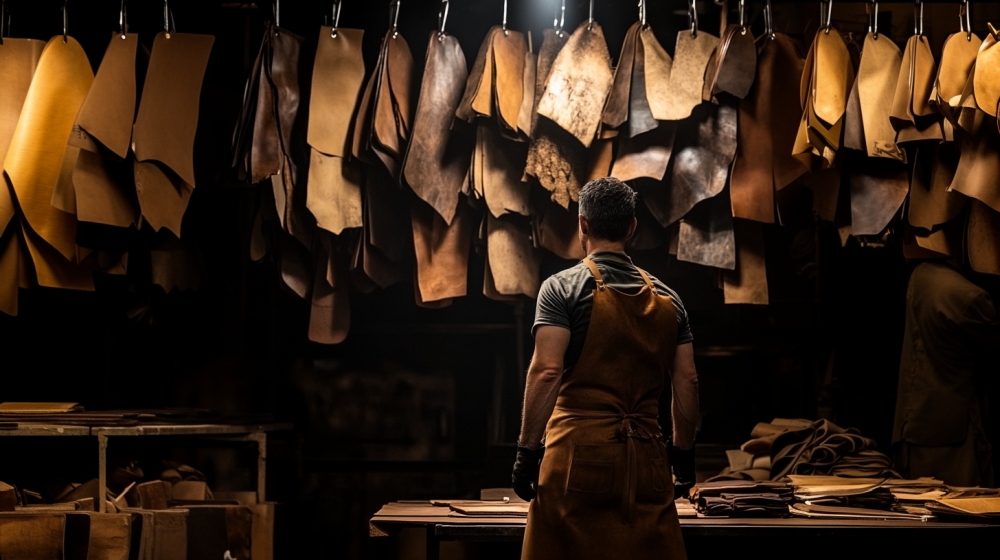
Leather

Raw Leather

For instance:

  • Parson S1 Boot lists Full Grain Leather upper material.
  • Diablo (Shoe) lists full grain leather upper (and padded leather tongue/collar).
  • Econo Chelsea Boot Black lists Premium Haircell Genuine Leather.
  • SAMSON highlights an “oily waxy” water-repellent leather spec with padded leather collar/tongue.

This matters because “leather” is not one thing. Footwear that holds shape, stays breathable, resists tearing, and survives abrasive work conditions starts with good hides and correct finishing.

Sole compounds engineered for the job (PU & Rubber – used appropriately)

ProFit’s own sole-compound breakdown is refreshingly straightforward:

  • Polyurethane soles are described as flexible, lightweight, antistatic, resistant to oil/acid/petrol/diesel, slip resistant, and typically the most cost-effective compound due to volume.
  • Rubber soles are positioned as heavier and more expensive, but designed for harsh environments, offering superior cut/puncture resistance and up to 300°C heat resistance, and being non-conductive.
  • ProFit states they use multiple dual-density PU soles and multiple heat-resistant/non-conductive rubber soles across the range.

And you can see those choices reflected in actual products:

  • Parson S1 Boot uses dual density PU and calls out a heat resistant outsole (110°C).
  • Econo Chelsea Boot Black uses dual density PU and calls out 90°C heat resistance.
  • SAMSON uses a dual density rubber/PU combination and calls out 300°C heat resistance plus chemical/fuel resistance.

ProFit also gives a practical, heavy-duty explanation of why rubber matters in harsh environments (scaffolding, abrasive metal surfaces, concrete, stones) and ties it to boot selection and longevity.

Footbeds and comfort systems are treated as core PPE, not an afterthought

A lot of brands obsess over toe caps and forget that discomfort drives non-compliance (people stop wearing the boot correctly, or switch to the wrong shoe “because it’s comfy”).

ProFit highlights comfort components at product level. For example, the SAMSON includes a ProFit ComFit PU Gel Foam Footbed and penetration resistance via a Kevlar midsole.

Even the FAQ leans into the idea that boots should match foot anatomy, and that they carry multiple toe-cap shapes to cater for different foot shapes.

That’s the comfort-to-compliance link: when a supplier takes fit seriously, safety adoption improves.

PU hydrolysis is openly addressed (storage realities = real-world durability)

ProFit also discusses polyurethane injected soles and hydrolysis – why storage conditions matter and how hydrolysis can occur when soles are stored unventilated for long periods.

This is the kind of “grown-up” detail that indicates product understanding beyond sales copy: durability isn’t only manufacturing – it’s also logistics, storage, and distribution discipline.

3) Competitive Pricing Tier-for-Tier: Value That Survives Real Comparisons

“Competitive pricing” is only meaningful if you compare equivalent products:

  • Similar compliance level (ISO spec)
  • Similar materials (upper, sole compound, toe cap)
  • Similar application (general purpose vs heavy duty)
  • Similar distribution/lead time
  • Similar warranty and aftersales terms

ProFit’s site gives a decent basis for tiering because it publishes indicative pricing and positions certain styles as entry-level vs heavy duty.

For example:

  • Econo Chelsea Boot Black is explicitly described as “entry level” and “cost-effective” at R 515.00 excl. VAT, while still listing ISO 20345:2023 and a specific LOA.
  • Parson S1 Boot sits in a practical “everyday” workhorse tier at R 552.00 excl. VAT, also under ISO 20345:2023 with LOA shown.
  • Heavy-duty options move into higher tiers (for example, SAMSON relates to oil & gas/mining/high-slip-risk environments and is built around rubber/PU, Kevlar penetration resistance, etc.).

Even ProFit’s homepage testimonials specifically call out the mix of quality/comfort and pricing value – one reviewer describes it as “very well priced for the quality,” and another calls out “Brilliant product, brilliant prices.”

And from a procurement standpoint, ProFit’s FAQ notes that Certified Partners can offer “highly competitive pricing” due to monthly quantity orders kept in stock.

Put simply: ProFit isn’t asking the market to believe a vague claim. They show enough to make tier-for-tier comparison possible.

4) Aftersales Service: Defined Warranty + Real Follow-Through

Aftersales isn’t “being friendly.” It’s what happens when something goes wrong, and how quickly it gets fixed without chaos.

A clear 12-month warranty, with coverage and exclusions spelled out

ProFit states warranty coverage on the entire safety footwear range is 12 months from date of purchase.

They also outline what’s covered (manufacturing defects, material failures like delaminating soles, split stitching not caused by misuse, hardware defects, defects in leather uppers under normal working conditions) and emphasize proper care guidelines.

That’s important because the best suppliers don’t do “hand-wavy guarantees.” They do structured support that procurement can rely on.

Aftersales follow-up is explicitly referenced in the ProFit network context

On a ProFit page describing their Zambia partner channel, it specifically mentions that staff “further after sales confirmation with our clients,” with a focus on ensuring satisfaction after purchase.

Even though that’s written in the context of a partner market, it reinforces the operational ethos: ProFit’s distribution model values aftersales engagement, not just the invoice.

5) Stock Holding and Delivery Speed: The 36-48 Hour Promise Is Built Into Their Model

South Africa is not kind to supply chains. If your supplier needs long lead times, your business ends up holding emergency stock “just in case,” which is basically money sleeping on shelves.

ProFit’s model is built around availability.

Delivery timeframes are clearly stated

ProFit’s FAQ states that online orders are shipped via The Courier Guy and “delivery is normally within 24-48 hours to most destinations,” with outlying areas up to 72 hours from dispatch.

So if your internal promise is “36-48 hours from receipt of order,” that sits comfortably inside the supplier’s stated norm for most locations.

Sizes are held ex-stock, with “no lead times”

In the same FAQ, ProFit states their men’s/unisex range is offered from UK size 2 to UK size 15 ex stock, and their ladies’ range from UK size 2 to UK size 9 ex stock, with “no lead times for any sizes.”

That’s not a small claim. It’s a big operational advantage-especially for:

  • sites with mixed workforce sizing realities
  • contractors who need fast replenishment
  • emergency replacements
  • rollouts where “one missing size” delays the entire issue cycle

A distribution network designed to avoid stock-outs, not cause them

ProFit also explains why their Certified Partner network is intentionally selective: they built a distribution network over years and aim to keep the balance of demand and supply “near perfect,” explicitly warning that unnecessary expansion can cause pipeline delays and stock-outs.

This is the kind of thinking that matters if you’ve ever experienced the classic problem: “Great product… when it’s available.”

Why ProFit Becomes the “Perfect Supplier” When You Judge the Whole System

Most suppliers try to win on one headline:

  • “We’re the cheapest.”
  • “We’re the toughest.”
  • “We’re the most premium.”
  • “We’ve got lots of styles.”

But safety footwear is never one-dimensional. The best supplier is the one that performs across the whole system:

Compliance system

  • ISO alignment is explained, not just claimed
  • NRCS LOA is treated as mandatory and product-level verifiable

Quality system

  • Materials and sole compounds are fit-for-purpose, with clear reasoning

Value system

  • Pricing is visible across tiers, and customers explicitly call out the quality-to-price ratio
  • Partners can offer competitive pricing due to stock-based volume ordering

Service system

  • Warranty is defined, structured, and practical
  • Aftersales follow-through is part of the channel culture

Availability system

  • 24–48 hour delivery norm is explicitly stated
  • Ex-stock size depth reduces operational friction
  • Distribution design aims to prevent stock-outs, not create them

A Simple Procurement Checklist (If You Want to Prove “Perfect Supplier” Internally)

If you’re planning on writing this up for your management or procurement team, here’s an easy framework you can lift into your internal memo:

  1. Compliance proof per style: Does the supplier provide ISO spec + NRCS LOA per product?
  2. Fit-for-purpose build: Are upper materials and sole compounds clearly specified and appropriate to the work environment?
  3. Tiered value: Are there credible entry, mid, and heavy-duty tiers with transparent pricing?
  4. Warranty clarity: Is there a written warranty with coverage, exclusions, and process?
  5. Speed and stock: Are sizes held ex stock and are delivery timelines consistently achievable?

On the evidence published across ProFit’s own site, ProFit scores strongly on every one of these.

Safety Footwear Isn’t a Product-It’s a Promise

When a worker laces up, they’re trusting the boot not just to pass a lab test, but to survive real work: diesel, dust, wet floors, scaffolding, concrete, long shifts, and the daily grind where comfort becomes safety.

And when a business chooses a supplier, it’s trusting them to deliver compliance, quality, value, and speed without excuses.

That’s why ProFit’s “perfect supplier” case is so persuasive: it isn’t built on one boast. It’s built on an entire operating model—compliance transparency, material clarity, tiered value, defined warranty support, and fast, stock-backed distribution
Steel Toe Caps and Why Shape, Size and Fit Matter

When most people think about safety footwear, the first image that comes to mind is the steel toe cap – that hardened shield across the front of the boot designed to save the wearer’s toes from crushing impact. It’s the symbol of protection, toughness, and industrial reliability.

But behind that familiar gleam of metal lies an engineering story far more complex than most realise. Today’s steel toe caps don’t just differ by strength or standard; they vary subtly – and sometimes dramatically – in width, height, length, curvature, and contour. These design variables make the difference between a boot that merely passes a safety test and one that a worker can wear comfortably for twelve-hour shifts, day after day.

1. The Function of the Toe Cap: More Than a Shield

The steel toe cap was introduced into industrial footwear over a century ago to prevent injuries from falling tools, rolling drums, or crushing machinery. In compliance with standards such as ISO 20345, every toe cap – steel, composite, or aluminium – must withstand an impact of 200 joules and a compression load of 15 kN.

However, what the standard doesn’t dictate is how the toe cap should feel. Comfort, balance, and foot shape adaptation are left to designers and last engineers. The magic lies in translating rigid protection into a form that moves naturally with the human foot – a task much more complicated than forging steel.

2. The Three-Dimensional Challenge of Foot Anatomy

Human feet vary enormously. The length of the toes, the breadth of the forefoot, the height of the instep, and even the curvature of the big toe differ across individuals and populations. A one-size-fits-all approach to toe protection is a recipe for discomfort.

A narrow cap squeezes the forefoot, creating pressure points that can cause corns, blisters, and fatigue. A tall cap may offer “wiggle room” but can alter balance and gait. A long cap may look sleek yet leave excess space that forces the foot to slide forward, rubbing against internal seams.

Therefore, manufacturers design toe caps in varying widths, heights, and lengths to accommodate this biological diversity – and pair each cap with a last, the three-dimensional mould on which the footwear is built.

3. Width: The Forgotten Dimension of Comfort

The width of the toe cap – from the medial (inner) to the lateral (outer) edge – plays a crucial role in perceived comfort.

Narrow Caps

Some European designs, especially those built for slim lasts, use narrower steel caps to achieve a sharp, athletic silhouette. While aesthetically pleasing, narrow caps can press the fifth metatarsal (the bone behind the little toe), causing discomfort for those with broad feet.

Wide Caps

Conversely, wide caps distribute pressure more evenly and allow toes to splay naturally. This is essential for wearers spending long hours standing, such as in mining or construction. Many modern brands now offer “wide fit” or “extra wide fit” ranges where the steel cap flares slightly at the sides, mimicking the spread of a natural foot.

Asymmetric Caps

Some innovative designs have gone further with asymmetric toe caps, shaped to follow the natural inward curve of the big toe and outward flare of the smaller toes. This subtle anatomical adjustment can drastically reduce fatigue and improve long-term comfort without increasing bulk.

4. Height: Balancing Protection and Profile

The height of the toe cap – measured from the inner sole to the top of the steel dome – affects both comfort and appearance.

Low-Profile Caps

Slimmer caps are lighter and create a sleeker silhouette, ideal for styles that cross over into casual or uniform wear. However, when the cap sits too close to the toes, it limits movement and can cause nail irritation, especially when walking downhill.

High-Volume Caps

Higher caps provide extra vertical space, reducing pressure on the toes and allowing for thicker socks. Yet, excessive height can create a “cavernous” feel and cause instability as the foot slides within the boot.

Optimised Balance

Ergonomic cap designs aim to mimic the natural upward arc of the toes – slightly higher near the big toe, tapering toward the pinky – while maintaining an even clearance. The best results occur when the internal volume of the cap aligns precisely with the toe spring and forefoot angle of the last.

5. Length: Every Millimetre Matters

The length of a steel toe cap determines where the protective zone ends relative to the metatarsal joints.

A cap that extends too far backward can create stiffness under the ball of the foot, restricting flexion. Too short, and the safety zone may leave the toes vulnerable during heavy impact.

In modern safety design, the ideal cap length extends just beyond the natural toe line – long enough to guard the phalanges but short enough to maintain natural forefoot flex.

Some last engineers even vary cap length across sizes to preserve proportional geometry, ensuring that a size 12 boot doesn’t feel more cramped or loose than a size 7.

6. Contour and Internal Finish

Comfort isn’t determined solely by size; it’s also about shape and finish.

Steel toe caps are cold-formed or stamped into domes, but the interior must be smoothly ground to prevent pressure points. Manufacturers often coat the inner surface with epoxy or polymer paint to avoid rust and create a seamless lining interface.

Additionally, a thin toe puff – a soft thermoplastic reinforcement wrapped over the steel – smooths the transition between metal and upper leather. The shape of this puff determines whether the toe box feels round, square, or tapered.

7. The Role of the Last: Where Art Meets Engineering

The last is the soul of every shoe. When paired correctly with a toe cap, it defines the internal comfort geometry. A mismatch between last curvature and cap contour leads to discomfort even if the boot meets all safety standards.

  • Round lasts pair best with wide, high steel caps – ideal for broad feet and heavy industrial boots.
  • Slim lasts complement narrow, low-profile caps – suited for uniform or lighter-duty safety shoes.
  • Ergo or anatomical lasts incorporate asymmetry, arch support, and toe curvature to mimic the human foot. When combined with shaped steel caps, they produce exceptional all-day comfort.

Modern CAD modelling allows designers to map pressure points digitally and refine last–cap integration down to half-millimetre precision.

8. Regional Fit Preference

Foot morphology varies by region, influencing cap design philosophies:

  • European lasts tend to be narrow with higher toe spring.
  • Asian lasts are typically wider and shorter.
  • African markets, especially Southern Africa, favour broad forefeet with moderate height.

For global brands, the challenge lies in localising cap geometry – producing region-specific lasts and toe caps that accommodate these anthropometric differences without retooling entire production lines. Some manufacturers now develop modular toe cap systems, where a single upper pattern can accommodate two or three cap widths, reducing inventory complexity.

9. Ergonomics and Biomechanics: Why Fit Equals Safety

A poorly fitting steel toe cap doesn’t just cause discomfort – it can compromise safety performance.

When toes are compressed, circulation decreases, leading to fatigue and slower reaction times. Workers may subconsciously alter their gait to avoid pain, increasing the risk of slips or joint strain.

Conversely, a well-fitted toe cap supports natural motion. Toes can flex and spread, maintaining balance and reducing energy loss during long shifts. Studies show that properly contoured safety footwear can reduce foot fatigue by up to 30 percent over eight hours of use.

10. Testing Comfort Alongside Compliance

The industry has long prioritised certification testing – impact, compression, penetration, slip, and sole resistance. But a new generation of brands is incorporating comfort benchmarking into quality control.

  • Pressure-mapping sensors identify hotspots inside the toe box.
  • Digital foot scanning ensures correct width and height distribution.
  • Thermal imaging detects areas of excessive heat from friction or tightness.

By merging biomechanics and safety engineering, manufacturers can refine steel toe geometry to match the natural distribution of load and movement.

11. The Human Factor: One Foot Does Not Fit All

Ultimately, no single design can suit every worker. Feet vary not only in dimensions but also in posture, gait, and activity pattern. A welder crouching for hours experiences different toe pressures than a warehouse picker walking 20 kilometres a day.

Progressive manufacturers, like us, now offer multiple fit profiles within the their ranges – standard, wide, and extra-wide – sometimes marked “E,” “EE,” or “EEE” in sizing charts. This flexibility mirrors what the sports footwear industry has long practiced but was slow to reach industrial safety footwear.

12. How Buyers Can Help

Safety managers and buyers play a critical role in fit education. Instead of assuming a size 9 boot suits all size 9 feet, they should encourage fit testing – ideally using both thin and thick socks to simulate real-world use.

If the steel cap presses against the toes immediately when standing, it will only worsen after hours of work. Similarly, a cap that feels overly spacious may cause instability or premature wear.

Training staff to recognise these cues reduces returns and, more importantly, improves worker well-being.

13. Comfort Is the New Compliance

For decades, the steel toe cap was defined purely by regulation – a barrier strong enough to withstand impact. But as the safety footwear market evolves, comfort has become a compliance category of its own.

Different widths, heights, and lengths are not cosmetic variations; they’re fundamental to aligning the rigid geometry of protection with the organic complexity of human feet. When a toe cap mirrors the natural contour of its wearer – when it hugs, not hinders – the result is more than comfort. It’s endurance, productivity, and pride.

After all, not all feet are the same shape – and the best safety footwear proves that protection should never come at the cost of how you feel inside your boots.

Talk to the team at ProFit Safety Footwear about our 5 different style designs of steel toe cap to suit the needs of your entire workforce; ranging from E to EEE widths.

Hydrolysis : Why you no longer need to worry at ProFit Safety Footwear

It felt like a very important time to update everyone buying our product in industry regarding why Hydrolysis is no longer a concern at ProFit Safety Footwear.

I get a few messages every so often, where rightfully so (well done to you) many ask about the concern of yesteryear which was “Hydrolysis” and yes, 15 years ago it was a legitimate issue for some companies and still is for many today.

But NOT for us.

Times change and advancements have reduced that risk to zero. Many companies and end users have been so *switched on* about the “time clock” that they reject product which isn’t produced within the last 12 to 24 months. And the truth is, our product is now stable for 60 months (5 years). So in 2025, selling boots made in 2020 is not a concern at all. The same warranty applies from ProFit, through Certified Partners and end users as it normally would.

In fact, and this is 100% accurate – since June 2016 – we have not had a single pair of boots returned from any Certified Partner across Southern Africa which is experiencing Hydrolysis. Not one pair.

How has the happened? Well, here is why…

1.⁠ ⁠The Traditional Problem: Hydrolysis in Polyurethane Soles

Historically, polyurethane (PU) outsoles were prone to a process called hydrolysis.

  • Hydrolysis is a chemical reaction where moisture (even just humidity in the air) breaks down the ester bonds in traditional PU formulations.
  • This caused soles to crumble, crack, or disintegrate after a few years (12 – 24 months), especially if the footwear was stored unused for long periods.
  • The issue wasn’t about wearing the boots — it often happened in storage, where moisture slowly degraded the material.

For decades, this was a major weakness of PU footwear compared to rubber.

2.⁠ ⁠Advances in Polyurethane Chemistry

In the last two decades, significant changes have been made:

  • Modified raw materials: Modern PU uses more stable polyols and isocyanates designed to resist hydrolysis.
  • Cross-linking agents: Improved catalysts and stabilizers reinforce the molecular structure against moisture attack.
  • Microcellular technology: Injection-moulded PU is now lighter, more elastic, and less porous, meaning less water absorption in the first place.
  • Additives and antioxidants: New chemical stabilisers prevent chain scission and maintain elasticity over long time frames.

The result? Hydrolysis is no longer a realistic threat under normal use or storage conditions.

3.⁠ ⁠What This Means for Safety Footwear

When you see “PU-injected safety footwear” today, it’s not just about comfort and lightweight soles — it’s also about long-term dependability:

  • Extended service life: Soles no longer fail prematurely due to age; the boot’s usable lifespan depends more on wear and tear than on time in storage.
  • Predictable safety compliance: Companies don’t face sudden sole failures that could compromise safety compliance under ISO 20345 or similar standards.
  • Lower liability: Manufacturers and employers have greater confidence that footwear won’t chemically degrade while sitting in a warehouse or stockroom.
  • Better warranty protection: Since hydrolysis risk is eliminated, warranties can focus on genuine production faults, not inevitable aging issues.

4.⁠ ⁠The Practical Importance of Knowing This

For procurement managers, safety officers, and workers, understanding this advancement is crucial:

  • No need for turnover based on age alone: In the past, boots were often replaced after 2 years regardless of condition, just to avoid hydrolysis failure. Modern PU technology removes this concern. And footwear can be stored for 5 years or more without any panic of “expiration” or “shelf life”.
  • Stock storage is safe: Large orders can be stored without fear of the soles degrading before they reach the user.
  • Trust in innovation: Workers and buyers can feel reassured that modern PU footwear is as durable as — if not more durable than — alternatives like rubber, while still being lighter and more comfortable.

Explore our safety shoes here safety boot range.

Understanding ISO 20345:2023 – A New Era for Steel Toe Cap Footwear

The world of workplace safety evolves alongside technological advances, changing materials, and emerging hazards. At the heart of this evolution is the ISO 20345 standard, the global benchmark for safety footwear. The latest revision – ISO 20345:2023 – marks a significant shift from its predecessor, ISO 20345:2011, offering enhanced protection, clarity, and performance criteria. For manufacturers, distributors, safety officers, and wearers alike, understanding these changes is not optional – it’s essential.

Below we explore the importance of ISO 20345:2023, with a specific focus on its impact on steel toe cap safety boots. It also examines the key changes from ISO 20345:2011, why they matter, and how they influence compliance, product design, and workplace safety globally.

1 – The Purpose of ISO 20345 and Why It Matters

1.1 What is ISO 20345?

ISO 20345 is an international standard developed by the International Organization for Standardization (ISO). It defines the minimum requirements for safety footwear used in industrial and commercial environments where foot injuries are a risk.

ISO 20345 ensures that safety footwear is:

  • Protective against mechanical impact and compression.
  • Resilient to environmental hazards such as heat, cold, fuel, and slipping.
  • Standardized across manufacturers and regions globally to ensure consistent quality and performance.

1.2 Why Safety Standards Evolve

Standards evolve to:

  • Incorporate new materials and technologies.
  • Reflect changes in global workplace practices.
  • Respond to newly identified risks (e.g., new industrial environments or tasks).
  • Clarify ambiguous language and improve compliance.

The 2023 revision was initiated to address these exact needs and more.

2. The Core of Steel Toe Cap Footwear and Its Role in ISO 20345

2.1 Steel Toe Caps: The Traditional Warrior

Steel toe caps are the oldest and most recognized form of foot protection. Designed to resist 200 joules of impact and 15 kN of compression, they protect the toes from falling objects, heavy loads, and crushing incidents.

Steel remains popular due to:

  • Proven durability.
  • Consistent manufacturing tolerances.
  • High compression and impact resistance.
  • Cost-effectiveness at scale.

Despite the rise of composite toe caps (fiberglass, carbon fiber, plastic), steel toe caps continue to be a mainstay in construction, logistics, manufacturing, and heavy-duty applications.

2.2 ISO 20345 and Toe Protection

Both the 2011 and 2023 versions of ISO 20345 categorize toe protection as an SB (Safety Basic) minimum requirement, ensuring:

  • Impact resistance up to 200 J.
  • Compression resistance up to 15 kN.

However, ISO 20345:2023 further codifies how this protection is tested, recorded, and labelled, making things more transparent and consistent across manufacturers.

3. ISO 20345:2023 – What’s New?

The ISO 20345:2023 revision isn’t just a rewording of the 2011 document. It’s a comprehensive rework, reflecting over a decade of feedback, incidents, and new testing capabilities. Below are the most significant changes and what they mean for steel toe cap footwear.

3.1 Reorganization and Modular Structure

  • The standard has been restructured into a modular format.
  • It now includes mandatory base requirements and a wide array of optional/additional performance requirements, each represented by specific codes.
  • This allows manufacturers to custom-build safety footwear suited to particular environments without ambiguity.

3.2 New Classification Codes

New classification codes such as S6 and S7 have been introduced:

  • S6 = All features of S3 + Waterproofing.
  • S7 = All features of S5 + Waterproofing and cleated outsole.

These updates make it easier to identify performance levels for waterproof and heavy-duty boots. Steel toe cap boots, previously coded as S3 or S5, now have clearer distinctions when they include waterproof membranes or anti-perforation midsoles.

3.3 Enhanced Slip Resistance Testing

The slip resistance test has changed:

  • The old SRC rating (combining the performance of SRA + SRB) has been replaced.
  • ISO 20345:2023 removes the SRC label and instead defines two specific test conditions:
  • – SR = slip resistance tested on ceramic tiles with glycerol.
  • – No code = if footwear does not meet slip resistance or is not tested.

For steel toe cap boots used in construction or oily/greasy environments, this shift makes it easier to trust performance claims—no more confusion about what “SRC” really means.

3.4 Updated Penetration Resistance

  • ISO 20345:2023 clarifies the testing of puncture-resistant midsoles.
  • Two levels of protection:
  • – PL (non-metallic) = flexible textile penetration resistance.
  • – PS (steel plate) = traditional steel midsole.

For steel toe cap boots, many still use steel midsoles, and the PS rating now ensures proper labelling and traceability.

3.5 Whole Footwear Testing

Footwear is now evaluated more holistically, not just by individual components. This ensures:

  • Steel toe caps perform well inside the boot and not just as a standalone component.
  • Fit, flexibility, and durability tests apply to the entire boot, promoting user comfort and extended product life.

3.6 Thermal Risks and Insulation Clarifications

New and refined symbols for thermal risks include:

  • HI (Heat Insulation)
  • CI (Cold Insulation)
  • WG (Waterproof Garment equivalent)

For industries such as mining, smelting, or cold storage – where steel toe boots are commonly used – these ratings allow for better boot selection.

4. Steel Toe Cap Footwear Under ISO 20345:2023

Steel toe cap boots must now meet more comprehensive criteria than in 2011. Let’s explore the specific implications.

4.1 Better Labelling and Certification

Manufacturers must now use clear labels such as:

  • SB-PS-SR-HI-CI: A steel toe cap boot with steel puncture resistance, slip resistance, heat and cold insulation.
  • Clear icons and modular codes eliminate ambiguous safety claims.

This matters for:

  • End users, who can now match boots to exact job hazards.
  • Procurement teams, who can vet footwear at a simple glance.

4.2 Stronger Emphasis on Testing

Steel toe boots must demonstrate:

  • Repeatability in impact/compression performance, with fewer tolerance variations allowed.
  • Endurance against cold and heat transfer through the steel toe—critical in extreme climates.
  • Improved flex resistance—steel components must work in tandem with upper and outsole materials.

This results in safer, more reliable boots for daily use in high-risk environments.

4.3 Certification Audits and Manufacturer Accountability

Under ISO 20345:2023:

  • Audits require traceability of steel toe materials and suppliers.
  • Footwear must withstand life-cycle wear simulation, ensuring long-term performance—not just lab compliance.

Manufacturers now face greater scrutiny, which benefits workers relying on trustworthy gear.

5. ISO 20345:2011 vs ISO 20345:2023 – The Key Differences

AspectISO 20345:2011ISO 20345:2023
StructureSingle integrated standardModular, with mandatory + optional requirements
Slip ResistanceSRC (SRA + SRB)SR (new test with ceramic + glycerol); SRC removed
Puncture ResistanceP (steel or textile)Split into PL (textile) and PS (steel)
Waterproof RatingsWR optional, unclear namingS6 and S7 explicitly define waterproof features
Toe Cap TestingStandalone testsToe caps must perform within full footwear
Thermal RatingsLimitedImproved heat, cold, and water insulation rating system
Markings/LabellingOften unclearClear modular codes for each performance feature
Risk ScenariosGeneralisedBetter alignment with specific job site hazards

6. Implications for Employers and Safety Managers

6.1 Safer Procurement Decisions

The new standard simplifies purchasing:

  • Match boots to exact hazards: water, oil, chemicals, heat, etc.
  • Avoid over or under specifying safety footwear gear.
  • Choose steel toe cap boots with clear PS + SR + CI codes for full protection.

6.2 Improved Compliance and Worker Trust

Workplace audits will be easier:

  • Inspectors can confirm boot compliance visually and through documentation.
  • Workers gain confidence in their gear, improving morale and safety adherence.

6.3 Long-Term Cost Reduction

Better-labelled, better-built steel toe cap boots:

  • Last longer.
  • Reduce injury rates and compensation claims.
  • Simplify stock management across different teams and sites.

7. Impact on Manufacturers and Retailers

7.1 Design Adjustments

Bootmakers must:

  • Retest old products or retire them.
  • Re-label and re-document all models.
  • Rethink materials, as PS midsole specs demand tighter tolerances.

7.2 Customer Education

Retailers can now explain the new modular codes on all branding, as customers shift from “S3” thinking to “S6-PS-SR-CI-HRO” language. This is a golden opportunity for trusted existing brands to stand out with superior quality and transparency.

8. Consumer Tips: Choosing the Right Steel Toe Cap Boot (Post-2023)

Your Work EnvironmentRecommended Codes
Construction & DemolitionSB-PS-SR-HRO-WRU
Cold Storage / RefrigerationSB-PS-SR-CI
Wet, Slippery SitesSB-S6-SR
Foundry / Heat WorkSB-PS-HRO-HI
Logistics / WarehousingSB-PS-SR

9. The Future of Safety Footwear and ISO Standards

ISO 20345:2023 sets the groundwork for:

  • Smart footwear integration (e.g., sensors, fatigue monitoring).
  • Sustainable materials, with testing for biodegradability and recyclability.
  • Even greater alignment with regional regulations (like SANS in South Africa. Along with our National Regulators Compulsory Specifications/NRCS requirements).

It raises the bar for what protective footwear can and should be in the modern workplace.

ISO 20345:2023 is more than a revision – it’s a revolution in how we think about foot protection. For steel toe cap safety footwear, it provides:

  • Clearer classification.
  • Stricter testing.
  • Holistic evaluation.
  • Better communication with users.

This new standard promotes safety, transparency, and accountability from the boot factory to the jobsite. And while change may require effort—from retesting to retraining—the result is a safer workforce and a clearer global language around protection. In a world where hazards evolve and responsibilities deepen, ISO 20345:2023 ensures steel toe cap boots stay one step ahead.

Please contact any member of the ProFit team should you wish to understand the upcoming changes to the ISO 20345 safety standards. We are already compliant to the new 2023 standards on our Hobo Boot, Hobo Shoe, Parson Boot, Lynx Shoe, Parson S1 Boot and Econo Chelsea Boot ranges. The rest of our safety boot range is currently under certification testing and will be complete before the end of October 2025.

These Boots Are Made for Working

Why High-Quality Leather Safety Footwear with Top-Tier Soles Should Be Your Only Choice

“You can’t step into the arena of hard work wearing budget boots and expect to walk out like John McClane in Die Hard.” – Probably Confucius, if he wore a pair of ProFit Safety boots.

CHAPTER ONE: THE FOOTWEAR APOCALYPSE

Let’s start with a scene.

You’re on-site. It’s cold, it’s wet, the concrete is unforgiving. Sparks are flying — both literal and metaphorical — and all around you is the thunder of productivity. Everyone’s got a job. Everyone’s got a pace. And you? You’ve just had your soul (and your sole) crushed by your R150 “safety” boots from the clearance bin at a street market.

Not even five weeks in and they’re cracking like the Ark of the Covenant in Raiders of the Lost Ark. The fake leather’s peeling, the steel toe’s rusting, and the rubber? Let’s just say it’s about as “durable” as wet tissue paper.

Meanwhile, that guy across from you — the one who walks like he owns the site, whose boots look like they’ve been through ten wars and still came out with swagger — he’s wearing the real deal. Full-grain leather. Precision stitching. Shock-absorbing polyurethane soles with heat resistance to boot (no pun intended). And while your feet are screaming “Why have you forsaken us?”, his feet are practically humming “Staying Alive” by the Bee Gees.

So here’s the bottom line: if your feet are your foundation — and spoiler alert, they are — then what you wear on them is not some afterthought. It’s the first thought.

Welcome to the gospel of proper safety boots.

CHAPTER TWO: LEATHER – NOT ALL HIDES ARE CREATED EQUAL

Let’s put the buffalo and cow back in the conversation. “Leather” is one of those words that sounds universally good. Like “organic” or “handcrafted” or “limited edition”. But don’t be fooled. There’s leather, and then there’s leather.

The Hall of Fame:

Full-Grain Leather – The Gandalf of leathers. Tough, wise, ages like a whiskey barrel. This is the unbuffed, uncorrected, unbothered version. It shows the real surface of the hide — scars, texture, natural grain. And that’s exactly what makes it superior. Stronger. Water-resistant. More breathable.
Top-Grain Leather – Slightly sanded down for a smoother finish but still a heavyweight champion. Not quite full-grain, but still worthy of a standing ovation. It can take punch – think of Iron Mike before Buster Douglas.
The Hall of Shame:

Genuine Action Leather – Ah yes, the world’s biggest misnomer. “Genuine” makes it sound authentic, but in truth, it’s the Frankenstein of leather. Compressed scraps glued together like some back-alley experiment. Not ideal unless your goal is foot rot and deep regret. The walk of shame.
Bonded Leather – Imagine if a handbag and a cardboard box had a terrible baby. That’s bonded leather. Avoid it like a rebooted Charlie’s Angels film.
If your work boots aren’t made from full-grain or top-grain leather, you’re not wearing protective gear — you’re just cosplaying as someone who does.

CHAPTER THREE: THE SOLE OF THE MATTER

Ah yes, the sole. Not to be confused with the thing your grandmother says is immortal. This sole is a whole different beast — and arguably the most important component in the architecture of a safety boot.

And let’s be clear: polyurethane and rubber soles are not created equal, and they certainly aren’t interchangeable with whatever knockoff foam hybrid your discount boots have going on.

Why Cheap Soles Are Foot Kryptonite:

– They crack. Early.
– They warp. Badly.
– They absorb water like a sponge at a beach party.
– And worst of all — they offer zero shock absorption. Jump off that third step like Kevin Bacon in Footloose at your peril.
– Cue the Law & Order: SVU sound effect: DUN-DUN.

Now Enter:

Top-Grade Polyurethane and Rubber

Let’s break it down like we’re teaching a physics class taught by Tony Stark:

Polyurethane (PU) – Light. Shock-absorbing. Slip-resistant. Flexible. This is the sports car of soles. Ideal for people on their feet 10+ hours a day, moving from gravel to scaffolding to lunch truck and back again. Double-density PU even gives you an inner core for comfort and outer shell for durability. Think Air Jordans in a Mad Max universe.
Rubber Soles – The Marvel Hulk. Heavier. Bulkier. But indestructible. Great for heat resistance (some up to 300°C), chemical protection, and slip hazards. Ideal for welding, oil rigs, or anywhere the floor wants to kill you.
And the best boots? They combine them. PU midsoles for comfort, rubber outsoles for defense. It’s the Avengers-level team-up your feet deserve. Assemble!

CHAPTER FOUR: POP CULTURE COMPARISONS (FOR SCIENCE)

Let’s take a detour for the nerds, the cinephiles, and the curious. Imagine these boots were action heroes.

Cheap Boots = Adam Sandler in Jack & Jill. Unintentionally hilarious, wildly unstable, falls apart on impact. Unlike Arnold… you won’t be back.
Top-Grade PU Boots = Jason Bourne. Smart, light, precise. Never loses his footing. Can take a hit and still sprint across a rooftop.
High-Quality Rubber Boots = John Wick. Unflinching. Bulletproof. The kind of force you don’t mess with — especially when it comes to fire, oil, or tactical scenarios.

In the world of work boots, you don’t want to be in a slapstick comedy. You want to star in a rugged, no-nonsense thriller where your footwear is your co-star, not the villain.

CHAPTER FIVE: THE PRICE LIE

Here’s the con: people look at premium safety footwear and balk at the price. “R800 for safety boots? I could buy three pairs for that!” And sure, you could. You could also buy three paper umbrellas and wear them as hats. Doesn’t mean it’s smart.

Because here’s the actual math:

Cheap boots last maybe 3 months. Then you replace them.
High-quality boots? Easily 2 years with proper care.
Add to that the reduction in back pain, blisters, foot fatigue, and you’re not just paying for boots — you’re buying performance enhancement. Think of it as a legal steroid for your entire shift.

It’s the same reason James Bond doesn’t wear knockoff Oxfords. When the mission matters, your kit matters.

CHAPTER SIX: FEATURES YOU DIDN’T KNOW YOU NEEDED

The holy trinity of safety boots goes well beyond just “steel toe and black.” Let’s talk upgrades:

– Composite Toes and Anti Puncture Material (Kevlar) Midsoles– Just as protective as steel but lighter and won’t set off airport scanners. Also, they don’t conduct heat or cold. It’s like upgrading from VHS to Netflix.
– Metatarsal Guards – Protect the top of your foot from falling objects. Useful if you work anywhere where gravity is your sworn enemy.
– EH! (Non Conductive and Insulated Ratings) – That’s electrical hazard protection, not a Canadian greeting. If you’re around live wires, this could save your literal life.
– Heat/Slip/Chemical Resistance – Because one oil slick shouldn’t send you flying like a Looney Tunes character.
– Moisture Wicking and Sports Mesh Liners – For the guy who sweats like he’s inside a sauna but who still wants socks drier than a Tarantino monologue.

CHAPTER SEVEN: CRAFTSMANSHIP – WHY CONSTRUCTION MATTERS

Let’s talk build. Real safety boots are constructed, not “assembled in a sweatshop by ghosts and duct tape.”

Look for:

Direct Injected Construction – Gives your sole durability, and offers mind-blowing flexibility with light weight feel. A sign that someone knew what they were doing when they made your boots.
Double & Triple Stitching – Single stitching is fine. Double & Triple stitching? That’s a company saying, “This won’t fall apart — even if you do.”
Padded Collars and Breathable Lining – Yes, your boots should feel like a cocoon and not a concrete coffin.
Ankle Support – Because one rolled ankle is all it takes to transform a productive day into a Netflix marathon in a hospital bed.

CHAPTER EIGHT: YOU’RE NOT JUST A WORKER — YOU’RE A WARRIOR

This is your gladiator arena. Your Batcave. Your Millennium Falcon. You don’t go into battle with subpar gear — you suit up with armor that means something.

Boots aren’t an accessory. They’re a foundational tool. Like Thor’s hammer, Indy’s whip, or Ripley’s exosuit. They’re the unsung hero of every hard-fought hour on-site. The difference between fatigue and performance. Between injury and longevity. Between “good enough” and built for life.

FINAL CHAPTER: THE FOOTWEAR MANIFESTO

So here it is. Your declaration. Your line in the concrete.

– Thou shalt not buy cheap boots.
– Thou shalt invest in full-grain leather.
– Thou shalt worship the gospel of premium polyurethane and blessed rubber soles.
– Thou shalt reject mediocrity from heel to toe.

Because at the end of the day, when the dust settles and the tools are down — you’ll still be standing tall, with feet that thank you. And let’s face it: in a world full of shortcuts, choosing quality leather safety footwear isn’t just the right move.

It’s the only move.

Why the Davids of Business Always Beat the Goliaths (When They’ve Got a Little Grit and a Lot of Personality)

There’s an undeniable charm to a small business that knows exactly who it is. Walk into a bustling coffee shop run by a husband-and-wife duo who remember your name, your dog’s name, and how you like your flat white, and you feel like you’re home. Contrast that with a multi-billion-dollar conglomerate whose customer service portal needs a login, a blood sample, and the tears of your firstborn to reset your password. The difference is palpable. One makes you feel like a person. The other makes you feel like a data point in a beige-coloured spreadsheet.

This blog is a love letter – albeit a wry and practical one – to the Davids of the business world: the small, personality-driven enterprises that punch well above their weight, build real human connections, and leave a trail of meaningful impact in their wake. I’m going to tell you why these businesses consistently outperform their corporate Goliath counterparts – not necessarily in raw revenue (although sometimes, gloriously, they do), but in lasting influence, genuine relationships, and customer loyalty that borders on the cultish.

Let’s begin with a simple premise: when it comes to business, soul matters.

The Soul of the Store Owner

If business were purely a mechanical process – inputs, outputs, supply chains, and bottom lines – then machines would already be running the show. The T-800 and T-1000 would be handling everything. But humans are sticky, sentimental creatures. We don’t just buy a product; we buy a story, a feeling, a sense of belonging. That’s where personality-driven businesses absolutely thrive.

Consider the phenomenon of the eccentric bookstore owner. She arranges books not by genre but by mood. She talks you into a novel that changes your life. Her dog sleeps under the poetry section. You go there because of her, not just the books. You could get the same book cheaper and faster online, but somehow, it would feel hollow and transactional, not transformational.

Small businesses driven by dynamic individuals thrive because they inject humanity into the marketplace. They can make decisions on the fly, adjust their service to your quirks, and – here is key – they care. Not because their KPI dashboard told them to, but because they have their name on the door, and pride in what they create.

The Perils of Corporate Bureaucracy

Let’s now turn to the large corporate structure. Picture, if you will, a vast, grey building – metaphorically and literally – filled with floor after floor of departments, sub-departments, compliance teams, internal memos, and people with job titles like “Chief Synergy Alignment Officer.” In these places, decision-making becomes a sport in bureaucratic acrobatics. Innovation is often proposed in a meeting, sent for stakeholder review, sanitised by legal, and finally launched six months too late in a format that no one asked for.

In such environments, customers are numbers. Not metaphorically – literally. They are user IDs, customer segments, demographic slices. The human behind the data gets lost in the scale of it all. Try calling one of these companies. Chances are, you’ll be greeted by a chirpy AI assistant who is “thrilled to help you” but immediately funnels you into a menu labyrinth that would make Theseus weep.

These corporations are not evil (well, most aren’t). They’re just too big to move with grace, too layered to speak with a human voice, and too reliant on policies to permit personality.

The Speedboat Versus the Tanker

Think of small businesses as speedboats. They can turn on a dime, zip through waves, and explore new directions with minimal fuss. Large corporations are tankers – powerful, massive, but glacial in their ability to change course.

In a small business, a customer complaint is often handled directly by the owner. “Oh no, let me fix that right now,” says the salesman, who is also the manager, the HR department, and the marketing team. In a corporation, the same issue might take three weeks, two ticket numbers, a chain of customer service reps, and a survey request at the end.

And when it comes to creativity? The speedboat wins again. Small businesses can try new ideas – wild, messy, thrilling ideas – without a 27-page proposal and a sign-off from the department of risk. That’s why some of the world’s best innovations, trends, and viral hits start not in the boardroom, but in a garage, a café, or a studio apartment with poor lighting and excellent coffee.

The Trust Economy

We live in an age where trust is the rarest currency. Consumers don’t want to be “targeted” by ads – they want to be seen. They don’t want loyalty programs with complicated point systems; they want loyalty built through honest service, delightful moments, and a bit of human quirk.

That’s where small businesses shine. Customers often know who is behind the product. They can put a face to a name. And call that person directly if required! And in an era of mass production and faceless corporations, this human connection becomes a superpower.

When trust is high, mistakes are forgiven. When trust is absent, even perfection feels suspicious. A small café that runs out of muffins is “endearing and popular.” A chain store that does the same is “unacceptable and disorganised.” It’s not just the product – it’s the relationship.

The Secret Weapon: Passion

Let us now speak of passion Maximus – not the kind whispered in perfume ads, but the sweaty, sleeves-rolled-up, lived-it-built-it kind. Small business owners live their work, eat their work and sleep their work. They don’t just clock in and out; they breathe the brand. They wear their brand. With pride.

That energy radiates outward. You feel it in the way a phone call is made, in the personally written newsletter, the real time thank you for your order reply, in the clever social media posts that sound like the real human with a sense of humour and pop culture reference who wrote them. Passion, when infused into business, becomes magnetic. It is undeniable.

In contrast, corporate passion is often reduced to slide decks and mission statements no one reads. While the intent might be there, the execution gets smothered under policies and protocol. What began as a bold idea in a brainstorm becomes another vague bullet point on a poster in the breakroom or boring and unnecessary Zoom meeting webinar.

Culture, Not Cubicles

Small teams with big personalities also tend to build remarkable internal cultures. There’s camaraderie, collaboration, a we’ve got each others back mentality – and often a shared sense of madness. The startup with mismatched chairs and a whiteboard full of half-baked ideas often outpaces the glossy, cold efficiency of the corporate giant.

Why? Because culture isn’t about perks; it’s about purpose. A team of five who believe in what they’re doing will outrun a team of 500 who are just trying not to get fired. Culture in small businesses is organic, not mandated. It grows from shared late nights, laughter, and the occasional existential crisis over spreadsheets and stock counts.

This is not to romanticise chaos – successful small teams often work incredibly hard – but it’s to celebrate the fact that when everyone’s voice matters, people bring their best selves to work. And that always, always shows up in the results. Regardless of how challenging any crisis may seem.

The Emotional ROI

Big business loves the idea of ROI (Return on Investment), preferably displayed in quarterly bar charts. But small businesses traffic in another kind of return: Emotional ROI.

Emotional ROI is when a customer walks out smiling. When they recommend your service not because of a loyalty discount, but because they genuinely love what you do. It’s the thank-you note. The birthday wish that is actually personalised. The store that plays your favourite record when you walk in – not because an algorithm suggested it, but because the owner remembers. Just like your favourite flowers or Scotch on a special occasion.

These moments build emotional capital. And emotional capital, while unquantifiable, is incredibly powerful. It turns buyers into believers. It builds word-of-mouth, loyalty, and love – all things that no advertising budget can truly buy.

The Myth of Scale

There’s a myth in business that bigger is always better. But scale is a double-edged sword. Sure, growth can mean more revenue, more reach, more opportunity. But it can also mean dilution – of purpose, of quality, of soul.

Many great companies have stumbled while chasing growth. They expand too fast, lose the personal touch, and wake up one morning realising they’re no longer who they set out to be. Small businesses, when they stay true to their identity, are often more sustainable precisely because they resist the pull of scale-for-scale’s-sake.

There’s immense value in staying small and great rather than growing big and average.

David Always Had Better Aim

Let us return to my metaphor: David and Goliath. Goliath was enormous, armoured, and intimidating. But he was also slow and overconfident. David, nimble and precise, used what he had – a slingshot and good aim.

In business, your slingshot might be storytelling. Because you’ve lived to tell the tale. It might be customer service. Because you physically picked the pair you just handed to a client. It might be innovation, culture, or sheer likability. Because your energy is palpable and contagious. So if you’re a small, personality-driven business, never forget: your size isn’t your weakness. It’s your edge.

Customers today are looking for soul. They’re weary of the sterile, the automated, the impersonal. They crave connection, quirk, care. And when they find it, they stick with it.

In the long run, the Davids win. Not always in dividends and share price, but in meaning. In legacy. In love.

And that – when they one great scorer comes to mark against your name – surely, is the kind of success that matters most.

Providing PPE is Good Business Practice

Providing PPE for Employees is Good Business Practice in South Africa

Imagine heading into work each day, assured that your safety is being prioritized by your employer. This is the confidence that comes with a workplace committed to safety and providing proper Personal Protective Equipment (PPE). In South Africa, the necessity of PPE is not just about maintaining a safe work environment—it’s mandated by key laws, including the Occupational Health and Safety Act (OHSA) of 1993 and the Compensation for Occupational Injuries and Diseases Act (COIDA) of 1993. These laws were designed to protect employees and require companies to provide safety gear where workplace hazards exist. But there’s much more to it than meeting legal obligations. Supplying PPE makes good business sense, boosting morale, productivity, and the company’s reputation.

By offering essential items such as safety boots, gloves, and overalls, companies show employees that they are valued and protected. This kind of investment is not only a regulatory requirement but a powerful way to create a responsible and productive workplace.

1. Complying with Legal Requirements

In South Africa, the Occupational Health and Safety Act (OHSA) and the Compensation for Occupational Injuries and Diseases Act (COIDA) outline the obligations companies must meet to ensure worker safety. OHSA mandates that companies assess potential risks in the workplace and implement safety measures to prevent harm, including providing the appropriate PPE. Failure to adhere to these laws could expose a company to significant financial and legal risks, from fines to possible civil lawsuits if negligence is proven. COIDA, meanwhile, provides a structure for employee compensation in the event of work-related injuries. However, if an injury occurs because an employer neglected to provide PPE, the employer may lose their protection under COIDA, leaving them open to direct claims.

Understanding and adhering to these regulations isn’t only about avoiding penalties; it’s about fulfilling an ethical duty to keep employees safe. Providing PPE not only demonstrates compliance but also shows employees and clients that the company is committed to upholding workplace safety standards.

2. Reducing Costs Through PPE Policies

While the upfront expense of PPE might seem steep, it’s a cost-effective way to prevent more substantial expenses in the long run. When employees have access to safety gear like gloves, glasses, and protective boots, they’re much less likely to suffer injuries, reducing both the number and cost of injury-related compensation claims. Additionally, safe workplaces tend to experience lower turnover rates, as employees are more likely to remain with companies where they feel protected and valued. This can reduce recruitment and training costs associated with replacing injured or dissatisfied workers.

Moreover, PPE contributes to uninterrupted productivity. With fewer accidents, work progresses smoothly, deadlines are met, and employees remain focused. This creates a more profitable and efficient work environment, proving that PPE is more of a long-term investment than an expense.

3. Fostering a Positive Workplace Culture

Supplying PPE (such as safety boots and PPE glasses) can play a crucial role in shaping workplace culture. When employees know their safety is prioritized, they’re more likely to feel valued, respected, and motivated to give their best effort. The provision of PPE sends a clear message that management genuinely cares about its employees’ well-being. This simple step helps build trust and loyalty, making workers feel that they’re part of a supportive and responsible team.

In turn, a positive workplace culture enhances morale, productivity, and cooperation. When employees are happy and engaged, they’re more inclined to contribute actively to the company’s goals, leading to a more cohesive work environment and better overall performance.

4. Essential PPE Items for a Safer Workplace

While every workplace is unique, several core PPE items are generally essential in most environments:

Safety Boots: Vital for protecting against sharp objects, heavy tools, and slippery surfaces.
Safety Socks: Often used with safety boots, these provide added protection and comfort, helping prevent blisters or cuts.
Safety Glasses: Protects eyes from flying debris, dust, or chemicals.
Gloves: Available in various materials, gloves protect hands from cuts, chemicals, and other hazards.
Overalls: Providing full-body coverage, overalls shield against environmental hazards, abrasions, and contaminants.

Providing these items as standard can dramatically improve safety and reduce the risk of accidents.

5. Building a Reputation for Responsibility

In today’s world, reputation matters. Companies that actively work to protect their employees’ safety often see benefits beyond the workplace. By consistently supplying PPE and promoting a safety-first approach, businesses strengthen their public image, making them more attractive to customers, investors, and potential hires. This is particularly important for companies operating in competitive markets, where public perception can significantly impact success.

Moreover, a strong safety record boosts the company’s standing within the industry and contributes to Corporate Social Responsibility (CSR) goals. A commitment to employee safety highlights the business as an ethical, trustworthy, and sustainable operation, providing value to society beyond just profits.

Key Takeaways
Offering employees basic PPE is a powerful way for businesses to demonstrate commitment to safety, adhere to legal standards, and reduce the likelihood of costly workplace injuries. By ensuring that all employees have access to essential items like boots, gloves, and safety glasses, companies protect both their workforce and their bottom line. Prioritizing safety fosters a positive workplace culture and enhances a company’s reputation, leading to long-term growth and sustainability.

Final Thoughts
For South African businesses, providing PPE is more than a legal responsibility; it’s an investment in the well-being of their workforce and a cornerstone of sound business practice. When companies prioritize safety, they build trust, encourage productivity, and position themselves as leaders in responsible corporate conduct.

What Is the Occupational Health and Safety Act (OHSA)?

The Occupational Health and Safety Act (OHSA) of 1993 is South Africa’s primary legislation governing workplace safety, aiming to protect employees from hazards in their work environments. Enacted to ensure that employers and employees take responsibility for health and safety, the OHSA mandates risk assessments, hazard management, and the implementation of safe work practices across industries. Employers are legally required to provide a safe workspace, adequate training, and necessary protective equipment. Additionally, employees must follow safety protocols and report unsafe conditions. By promoting a proactive safety culture, the OHSA helps prevent accidents and injuries, creating a safer, more productive workforce.

What Is the Compensation for Occupational Injuries and Diseases Act (COIDA)?

The Compensation for Occupational Injuries and Diseases Act (COIDA) of 1993 is South Africa’s framework for compensating employees who suffer workplace injuries or occupational diseases. Under COIDA, employers must register with the Compensation Fund and contribute payments, enabling workers to claim compensation if they’re injured or contract a disease due to their job. This Act removes the employee’s right to sue the employer in civil court for work-related injuries, providing financial support and medical benefits through the Compensation Fund instead. COIDA ensures prompt coverage for medical treatment, lost wages, and, if necessary, disability benefits or dependents’ support. By protecting both employees and employers, COIDA fosters safer workplaces while offering employees vital support in the event of injury or illness.

________________________________________
For a chat about your work forces safety boot requirements please give us a call on +27 11 892 8030 / 8031 / 8032 or drop an email to organise a call info@profitfootwear.co.za

Antistatic vs ESD

Antistatic vs. ESD: Safety Footwear for Workers

When choosing safety footwear, particularly for industries such as construction and electrical work, understanding the terms “antistatic” and “ESD” (Electrostatic Discharge) is essential. For example, an electrician’s boots with inadequate antistatic properties might cause a dangerous spark near flammable materials, while poor ESD control could damage sensitive electronic components.

Antistatic Properties

Antistatic properties refer to a material’s ability to prevent the accumulation of static electricity. This feature is designed to reduce static charge buildup on the surface of safety footwear, particularly important for electricians and construction workers.

What Is The Purpose Of Antistatic Properties in Boots:
Prevention of Static Build-up: Antistatic materials minimize the risk of static discharge that could be disruptive or dangerous in certain work environments.
Comfort and Safety: Antistatic footwear helps prevent static-related discomfort and protects workers handling sensitive electronics or other delicate components.

Typical Application:
Antistatic footwear typically features soles designed to resist high levels of static charge accumulation but does not necessarily provide a pathway for controlled static discharge. The primary goal is to reduce the build-up of static on the surface of the boots.

Resistance Levels:
The resistance of antistatic materials usually falls between 10^6 and 10^9 ohms. This is sufficient to prevent static charge build-up but not necessarily low enough to allow controlled static discharge to the ground.

ESD (Electrostatic Discharge) Properties

ESD properties refer to a material’s ability to safely discharge static electricity to the ground. This specific antistatic behavior focuses on preventing static electricity from discharging in a way that could damage electronic equipment or create hazardous conditions for workers.

What Is the Purpose ESD Properties in Boots:
• Controlled Discharge: ESD footwear is specifically designed to control and safely dissipate static electricity to the ground, protecting sensitive electronic components and ensuring workplace safety.
• Workplace Safety: In environments like clean rooms, electronics manufacturing, or areas with flammable substances, ESD footwear helps prevent accidental static discharge that could damage equipment or cause hazards.

Typical Application:
ESD footwear is used in industries where controlling electrostatic discharge is critical. This type of safety footwear ensures that static electricity is directed safely away from both workers and equipment.

Resistance Levels:
ESD footwear typically has a resistance between 10^4 and 10^6 ohms, allowing controlled dissipation of static electricity to the ground, thus minimizing the risk of electrostatic discharge.

What Are The Differences between Antistatic and ESD?

Antistatic footwear prevents static build-up, ideal for general industrial settings, while ESD footwear safely discharges static, crucial for sensitive environments like electronics and clean rooms. Antistatic options have higher resistance (10^6 to 10^9 ohms), whereas ESD types have lower resistance (10^4 to 10^6 ohms).

1. Function:
o Antistatic Footwear: Aims to prevent the build-up of static electricity on the boot itself, reducing static-related discomfort or hazards for workers.
o ESD Footwear: Focuses on safely discharging static electricity to the ground, preventing damage to sensitive components or accidents in hazardous environments.
2. Resistance Levels:
o Antistatic Footwear: Higher resistance (10^6 to 10^9 ohms) to reduce static accumulation.
o ESD Footwear: Lower resistance (10^4 to 10^6 ohms) to enable safe static discharge.
3. Applications:
o Antistatic Footwear: Suitable for general industrial environments where static electricity is a minor concern.
o ESD Footwear: Critical for environments like electronics manufacturing, clean rooms, and hazardous areas where static discharge could be dangerous.

Testing Antistatic Properties of Polyurethane-soled Boots

1. Maintain Controlled Conditions
Ensure accurate testing by maintaining the environment at a stable temperature of 20°C to 23°C, with relative humidity between 50% and 60%. The testing area must also be free from dust and other contaminants to prevent interference with the results.
2. Use Proper Equipment
A well-calibrated ESD tester is required to measure how quickly static dissipates from the boots, and the footwear must be placed on a clean, conductive test surface to simulate real-world conditions and obtain precise results.
3. Follow Testing Procedures
Before testing, condition and clean the boots in a controlled environment for 24 hours. Apply a known voltage to the boots and measure their resistance, which should be below 1 x 10^9 ohms to meet antistatic performance standards.
4. Adhere to Standards
Ensure compliance with industry standards such as ASTM F2413, IEC 61340-4-3, or ISO 20345. Thoroughly document every step of the process and results to verify compliance and maintain accurate records.
5. Prioritize Safety and Maintenance
Personnel conducting the tests must be properly grounded to prevent static discharges that could affect the test results. Regularly check and calibrate testing equipment to maintain accuracy and functionality.
________________________________________

By getting to grips with the differences between antistatic and ESD properties, industries such as construction and electronics can better protect their teams and equipment. Choosing the right polyurethane-soled boots and testing them properly ensures they perform well in environments where managing static electricity is crucial for safety and efficiency.

________________________________________
For a chat about your work forces safety boot requirements please give us a call on +27 11 892 8030 / 8031 / 8032 or drop an email to organise a call info@profitfootwear.co.za