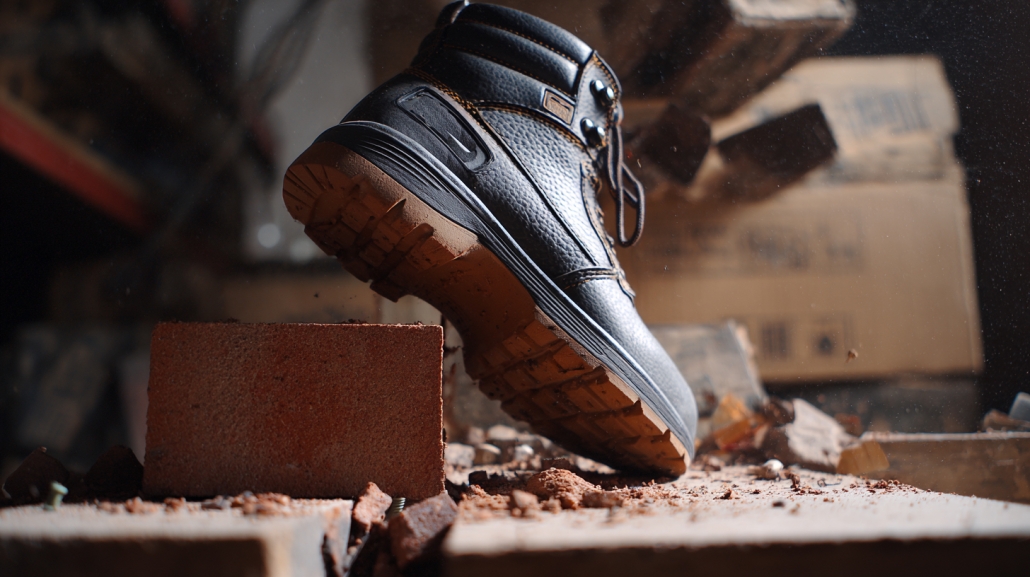
Anti-Slip (Slip Resistant) versus Non-Slip
The terms anti-slip and non-slip are often used interchangeably in marketing, but from a technical, engineering, and standards perspective—especially in safety footwear—they are not identical. The key difference lies in measured friction performance, certification, and engineering intent, not just wording.
Below is a clear technical breakdown, which is especially relevant given your deep involvement in ISO-compliant safety footwear.
Core Technical Principle: Friction Coefficient
Slip resistance is governed by the coefficient of friction (COF) between the sole and the walking surface.
- Higher COF = more grip
- Lower COF = higher slip risk
There are two types:
- Static COF – resistance before movement begins
- Dynamic COF – resistance while sliding
Safety standards measure both under controlled conditions.
Anti-Slip: A Measured, Engineered Property
Technical definition:
Anti-slip refers to a product designed and tested to reduce slipping through specific materials, tread geometry, and certified friction performance.
It is an active engineering characteristic.
Key technical characteristics:
- Tested against recognised standards (ISO, ASTM, EN)
- Uses engineered sole compounds (PU, rubber, TPU blends)
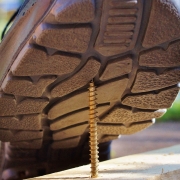
- Designed tread patterns to channel liquids away
- Achieves defined minimum friction thresholds
ISO 20345:2023 classification
Modern safety footwear uses the SR marking (Slip Resistance):
Test surfaces include:
- Ceramic tile with detergent
- Steel surface with glycerol
A boot marked SR has passed measured slip-resistance tests.
Non-Slip: A Marketing or General Descriptor
Technical definition:
Non-slip is a non-standardised, non-quantified term that implies slip resistance but does not guarantee certified performance.
It is a descriptive term, not an engineering certification.
It does NOT automatically mean:
- Tested to ISO 20345
- Meets SR classification
- Has measured friction performance
Engineering Difference in Material and Design
Anti-Slip Soles (Engineered)
Features include:
- High-friction rubber compounds
- Micro-surface roughness
- Multi-directional tread channels
- Fluid evacuation grooves
- Larger surface contact area
- Softer rubber blends for surface conformity
Rubber soles are particularly effective because rubber deforms slightly to increase contact.
Non-Slip Soles (General)
May include:
- Standard PU compounds
- Simpler tread patterns
- Lower friction material hardness optimisation
- No certified friction testing
Performance can vary widely.
Material Science Difference
Slip resistance depends heavily on sole compound chemistry.
Rubber (best anti-slip):
- Higher friction coefficient
- Better grip on wet surfaces
- Better oil resistance
PU (moderate):
- Lower friction than rubber
- Lightweight
- Less effective on oily surfaces
TPU blends:
- Durable
- Moderate grip
Tread Design Physics
Slip resistance comes from:
A. Mechanical interlocking
Tread edges grip surface irregularities.
B. Fluid displacement
Channels remove water, oil, mud.
C. Surface conformity
Softer rubber increases contact area.
Real-World Performance Difference
Anti-slip certified footwear performs significantly better on:
- Wet tiles
- Oily steel surfaces
- Smooth concrete
- Industrial environments
Non-slip labelled footwear may perform adequately in dry environments but may fail in hazardous conditions.
ISO 20345:2023 – Critical Modern Standard
Under ISO 20345:2023:
Slip resistance is now marked as:
- SR = Slip Resistant
Older classifications (SRA, SRB, SRC) were replaced.
This simplifies certification but maintains strict testing.
Are Rubber Anti-Slip Soles Superior?
This is particularly relevant to your ProFit Safety Footwear rubber sole range.
Rubber soles provide:
- 2–3× higher friction coefficient than PU
- Better grip in oil
- Better grip in water
- Superior durability
This is why premium safety footwear uses rubber outsoles.
Correct Technical Conclusion
Anti-slip is an engineered, tested, and certified performance property.
Non-slip is a descriptive marketing term without guaranteed measurable performance.
Proper Technical Terminology for Safety Footwear (Best Practice)
For safety footwear—especially ProFit’s ISO 20345:2023 certified range—the correct engineering term is:
Slip Resistant (SR certified)
Not simply “non-slip”.